As the core hub for material transportation, ports withstand the erosive testing of tens of millions of tons of ore and coal daily; the hopper is one of the nodes within the entire conveying system experiencing the most severe wear and complex operating conditions, and its wear-induced replacement frequency largely determines the operational efficiency of the port.
I. Analysis of Port Hopper Operating Conditions
Cutting Wear from High-Hardness Materials: Whether it is iron ore (Mohs hardness of approximately 7-8) or coal (often containing gangue), as they flow past the hopper walls at high speeds, they inflict continuous cutting wear on the inner surfaces. Under such operating conditions, traditional steel liners are often worn through within a few months or even weeks.
Severe Impact from Large Bulk Materials: Large pieces of ore and bulk materials dropping from elevations such as ship unloaders exert intense impacts on the hoppers. Although many high-hardness materials (such as pure ceramics) are wear-resistant, they lack sufficient toughness and are prone to fracturing under massive impacts.
Material Clogging and Adhesion: Port materials often have high moisture content, and coal, in particular, exhibits extreme stickiness when transferred during rainy weather. If the liner surface is rough or features step-like protrusions, it highly facilitates material clogging, severely compromising ship unloading efficiency.
Countering the intense cutting of high-hardness materials requires the hopper lining to possess ultra-high hardness, while addressing the severe impact of large bulk materials necessitates sufficient toughness; furthermore, adapting to the port’s humid, heavy salt spray, and highly fluctuating temperature environments requires the hopper to exhibit strong resistance to acid and alkali corrosion. Single materials struggle to meet these multifaceted demands, which prompted the emergence of the
3-in-1 ceramic liner.
II. Structure and Performance of 3-in-1 Ceramic Liners
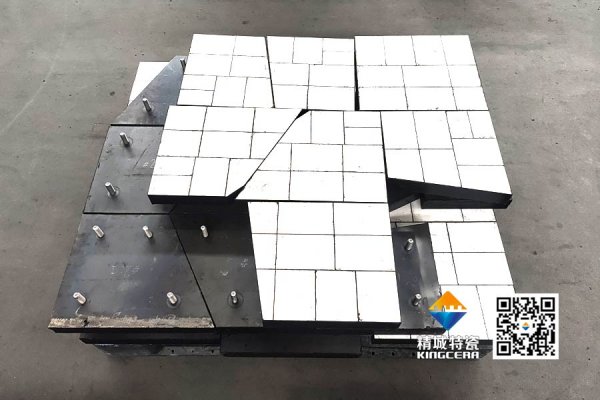
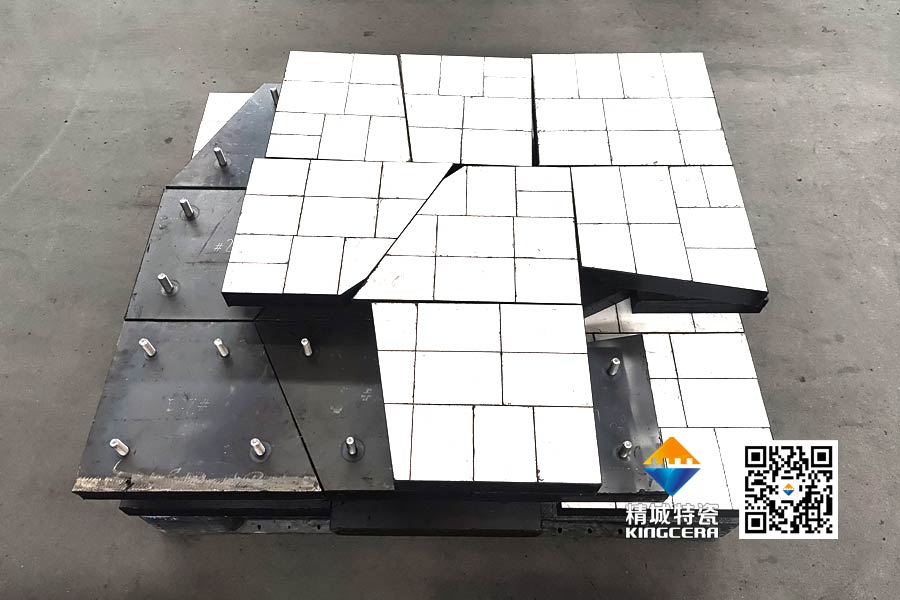
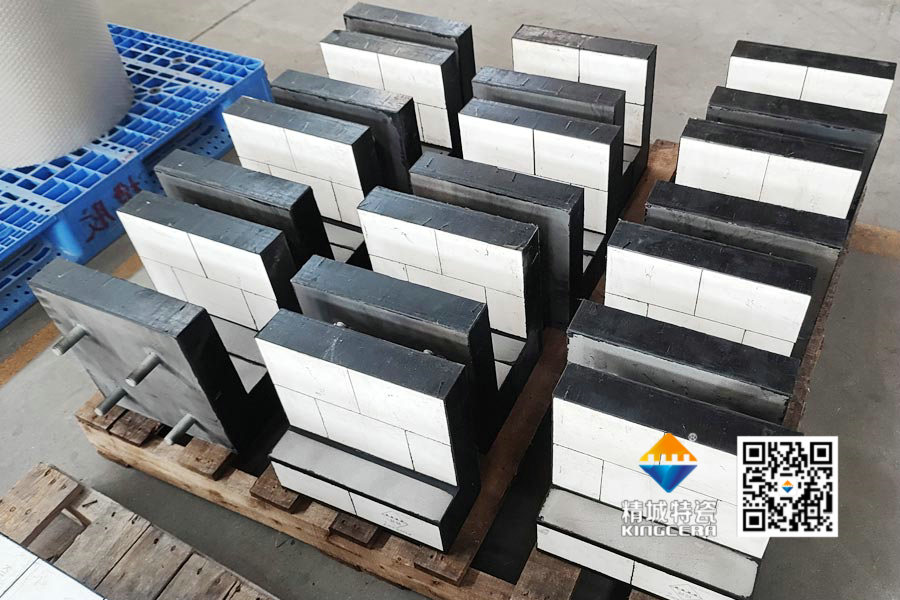
The 3-in-1 ceramic liner refers to a comprehensive composite liner consisting of ceramics, rubber, and steel plates, integrating the high hardness of ceramics, the toughness of rubber, and the structural strength of steel plates.
Layer One: Ceramic Layer
The core contradiction in hopper wear is the contest between material hardness and liner hardness. The
ZTA (
Zirconia Toughened Alumina) ceramics or 95% alumina ceramics utilized by Kingcera typically boast a hardness exceeding HRA 85. This “armor” layer enables the hopper’s inner wall to effortlessly withstand the cutting action of ores. Kingcera’s ZTA
ceramic liners have been thoroughly validated in practical applications at ports such as Qingdao Port and Tangshan Port, performing outstandingly in severely worn areas like the bifurcated funnels of ship unloaders and bucket wheel stacker-reclaimers.
Layer Two: Rubber Layer
Pure high-hardness ceramics are inherently brittle; if applied directly to the impact zones of hopper drop points, they are highly susceptible to shattering. The buffering rubber layer in the 3-in-1 structure absorbs the massive impact kinetic energy generated by falling large bulk materials, effectively protecting the ceramic layer from fracture while mitigating vibration-induced damage to the equipment body. This characteristic of “coupling rigidity with flexibility” allows it to handle the impacts of high-drop materials in ports with ease.
Layer Three: Steel Plate + Bolts
Port operations are highly averse to downtime; thus, the 3-in-1 liner is connected to the equipment via embedded bolts. Compared to traditional welding or adhesive bonding methods, this mechanical fixation approach holds significant importance in port environments.
Firstly, it prevents the risk of detachment caused by adhesive aging in humid and salt-spray environments, and secondly, replacements only require unbolting without the need for hot work, significantly shortening downtime for maintenance. For time-critical port operations, this represents immense hidden value.
III. Application Scenario Analysis
The application of 3-in-1 ceramic-rubber liners in port equipment is not one-size-fits-all but requires refined selection based on the specific areas of the hopper.
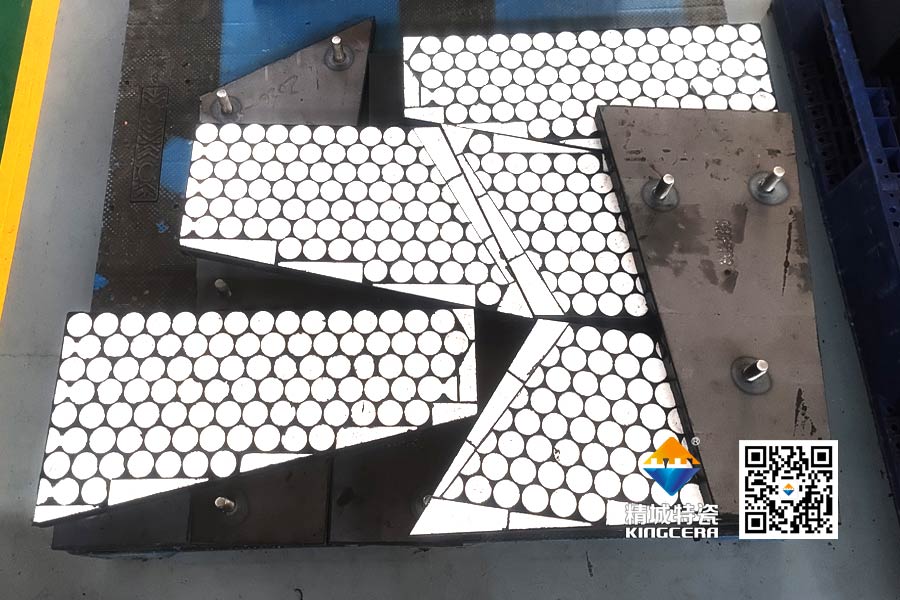
Drop Zone (Impact Zone): This area bears direct impacts. It is advisable to select 3-in-1 liners featuring thicker rubber layers and small, thick ceramic blocks with rounded corners, preferably utilizing impact-resistant ZTA ceramics. The thicker rubber layer adequately buffers impact forces, while smaller ceramic blocks prevent fracturing caused by excessive stress concentration on overly large individual pieces.
Chute Sidewalls and Straight Sections (Sliding Wear Zone): Materials here primarily generate sliding friction with minimal impact. 95% alumina ceramics can be selected for this zone; their smooth surfaces reduce material flow resistance, thereby serving an anti-clogging function.
Irregular Zones (Elbows, Funnel Flap Valves): Port hoppers frequently feature various curved surfaces. The advantage of the 3-in-1 liner lies in the plasticity of its rubber layer, which, combined with steel plate cutting, allows for the prefabrication of arc-shaped plates that perfectly conform to the equipment.
Hunan Kingcera Engineering Co., Ltd. has specialized in industrial wear protection for over 30 years; its ceramic products have undergone practical testing by thousands of clients worldwide, garnering widespread acclaim. Furthermore, Kingcera possesses extensive experience in port wear protection and can tailor exclusive anti-wear solutions based on specific working conditions and requirements.
(Original link:
港口料斗优化升级:三合一陶瓷衬板如何应对高硬度物料磨损与冲击 )
Samuel Wu / Translated
![[Case Study] Ceramic Lining Project for Blast Furnace Hoppers and Bins at a Steel Plant: Expected Service Life Reaches 10 Years](http://www.kingcera.com/zstatic/uploadimg/251011/094G41194-0.jpg)


 中文
中文 English
 Pусский
 Español
 日本語
日本語 한국어
한국어