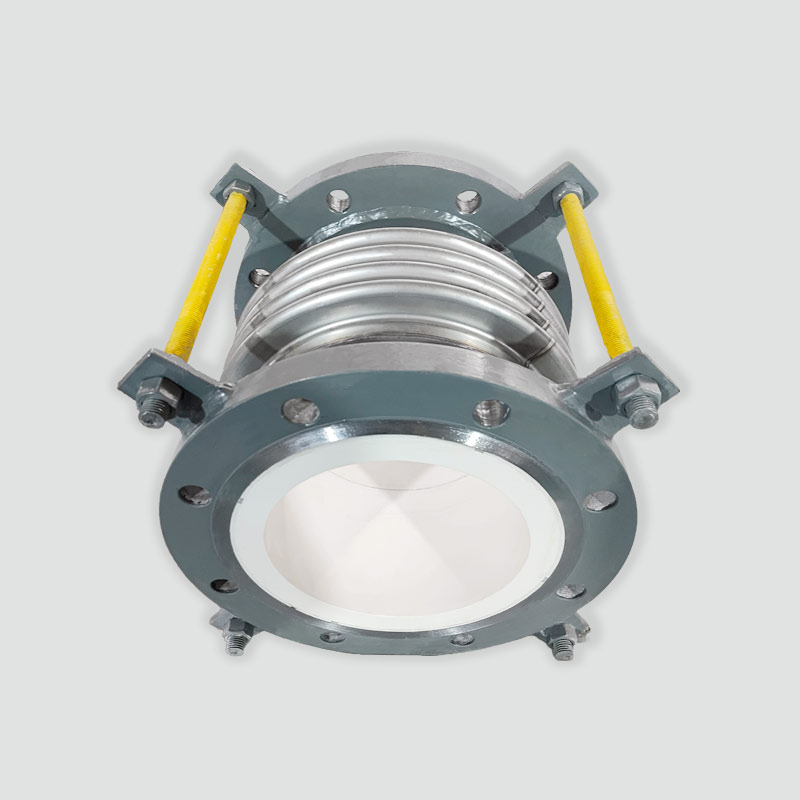
Recently, Kingcera undertook an alumina ceramic-lined feed pipe project for a lithium battery material manufacturing enterprise in Inner Mongolia. The company, primarily engaged in the preparation of lithium battery cathode materials, faced significant issues including rapid pipeline wear and high risks of metal contamination during the process of conveying powder into storage tanks. Following technical consultations, Kingcera provided a wear-resistant ceramic lining solution centered on isostatic pressed ceramic rings.
I. Project Background: Pain Points in Lithium Battery Cathode Material Conveying
Lithium battery cathode materials, such as lithium iron phosphate, typically consist of micron-scale particles with high hardness and irregular shapes. During the pneumatic conveying of cathode material powders, the material impacts the inner wall of the pipeline at high velocities, causing severe wear, particularly at the elbows. Traditional polymer pipelines or conventional metal pipelines struggle to balance wear resistance with the prevention of metal contamination. Polymer materials lack sufficient wear resistance and erode easily, while metal pipelines may release trace metal impurities due to erosion, adversely affecting the purity of the cathode materials. Modern lithium batteries require extremely high material purity and are highly sensitive to magnetic impurities (such as iron, chromium, and nickel); any contamination may lead to degraded battery performance or even potential safety hazards.
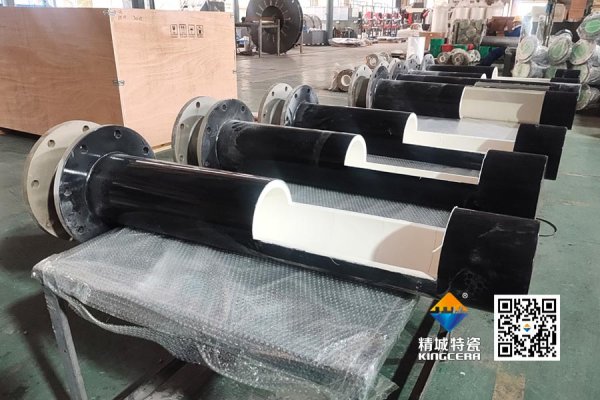
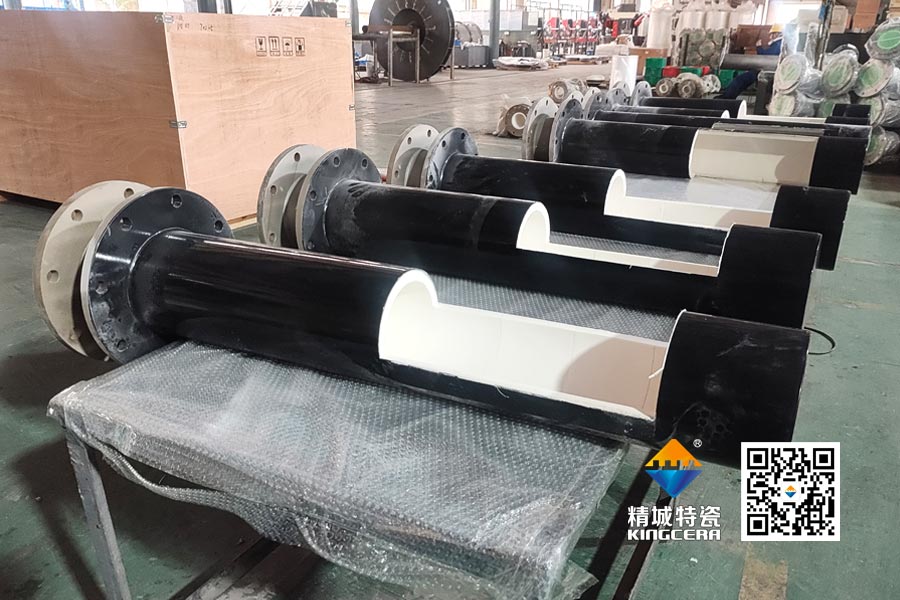
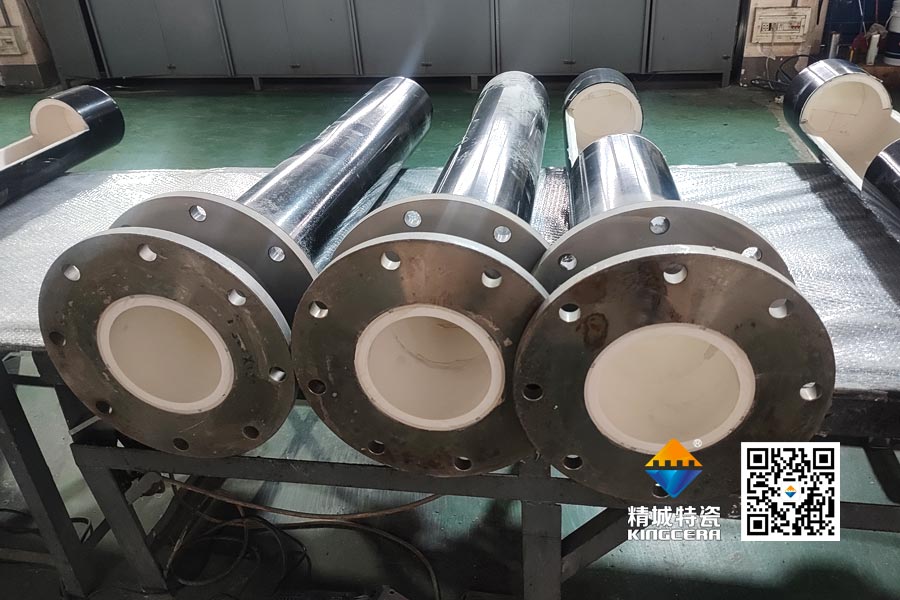
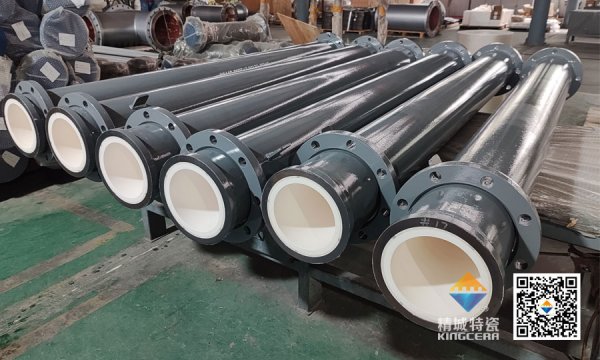
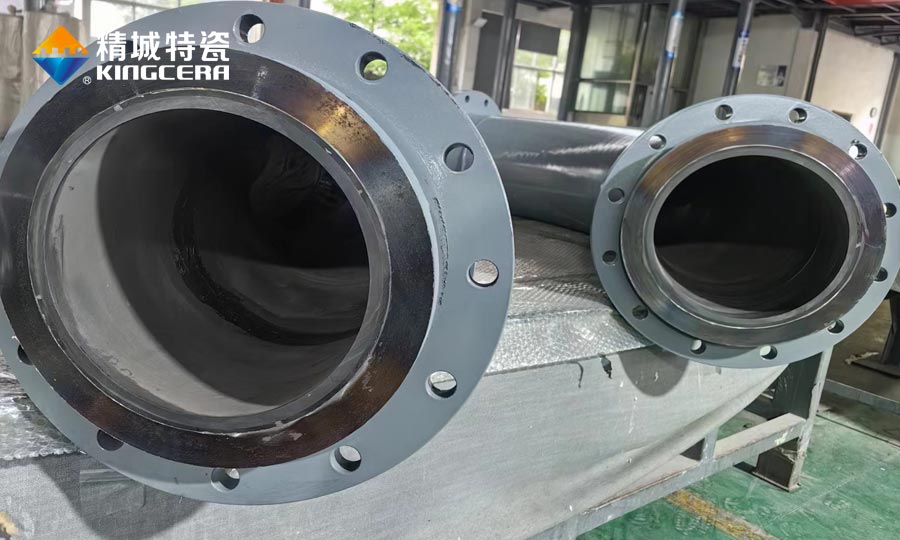
Pneumatic Conveying Feed Pipeline for Lithium Battery Cathode Material Powders
II. Kingcera’s Solution: Isostatic Pressed K95 Ceramic Rings
To address the aforementioned pain points, Kingcera designed a
wear-resistant ceramic pipe based on isostatic pressed ceramic rings for this project. The core components utilize K95 alumina ceramics, which possess the following characteristics:
High Hardness: The hardness of alumina ceramics exceeds HRA 85, providing wear resistance far superior to that of metals and polymers, effectively resisting long-term erosion by lithium battery powders.
High Purity: K95 ceramic is an inorganic non-metallic material; the sections in contact with the material consist entirely of a ceramic layer, thereby eliminating the introduction of metal impurities.
Corrosion Resistance: It possesses stable chemical properties and resists acid and alkali corrosion, making it adaptable to materials that may be weakly acidic or alkaline.
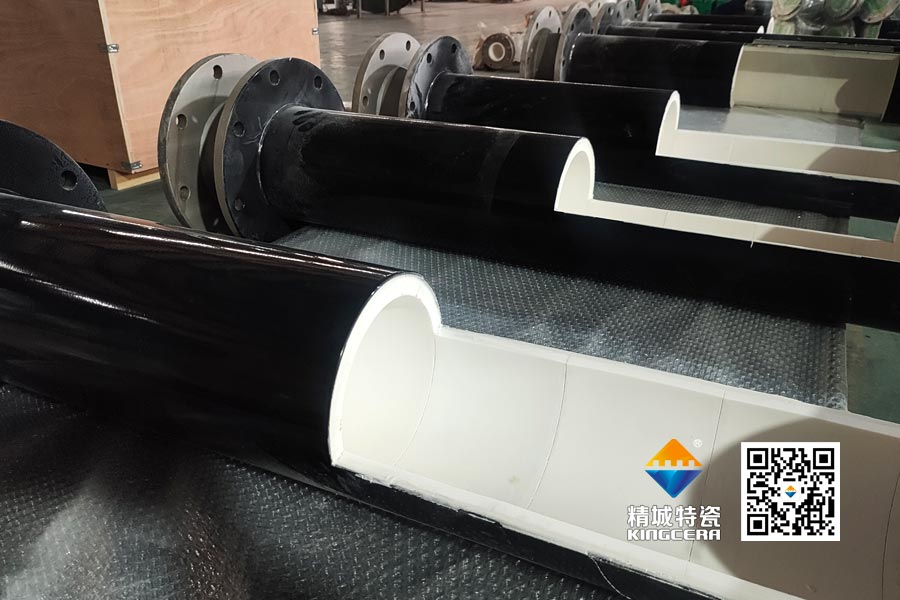
The technical advantage of isostatic pressing lies in the uniform pressure applied from all directions during the molding process, resulting in a high green body density free from internal defects. After firing, the ceramic grains are fine and uniform, offering strength and wear resistance superior to products manufactured through conventional dry pressing or slip casting. Furthermore, isostatic pressed ceramic rings feature smooth inner walls and precise dimensions, ensuring the pipeline’s interior is free of joints after installation. This ensures smooth powder conveying, prevents material build-up or clogging, and avoids the risk of cross-contamination caused by material residues in gaps.
Kingcera K95 Isostatic Lined Ceramic Ring Feed Pipe
III. Application Value
Extended Pipeline Life: The K95 ceramic lining increases the pipeline’s service life several-fold, reducing the frequency of downtime for replacements and lowering maintenance costs.
Guaranteed Material Purity: The ceramic layer completely isolates the metal pipe wall from the material, eliminating potential metal contamination along the conveying path.
Stable Conveying Efficiency: The smooth inner wall reduces conveying resistance, maintaining stable pressure within the pneumatic conveying system while preventing material residue.
Currently, this batch of
wear-resistant ceramic feed pipes has been delivered and installed at the customer’s site in Inner Mongolia. Kingcera will continue to provide reliable solutions for wear protection, corrosion resistance, and metal contamination prevention for the new energy material industry, helping clients enhance production line stability and product quality.
Samuel Wu / Translated


 中文
中文 English
 Pусский
 Español
 日本語
日本語 한국어
한국어