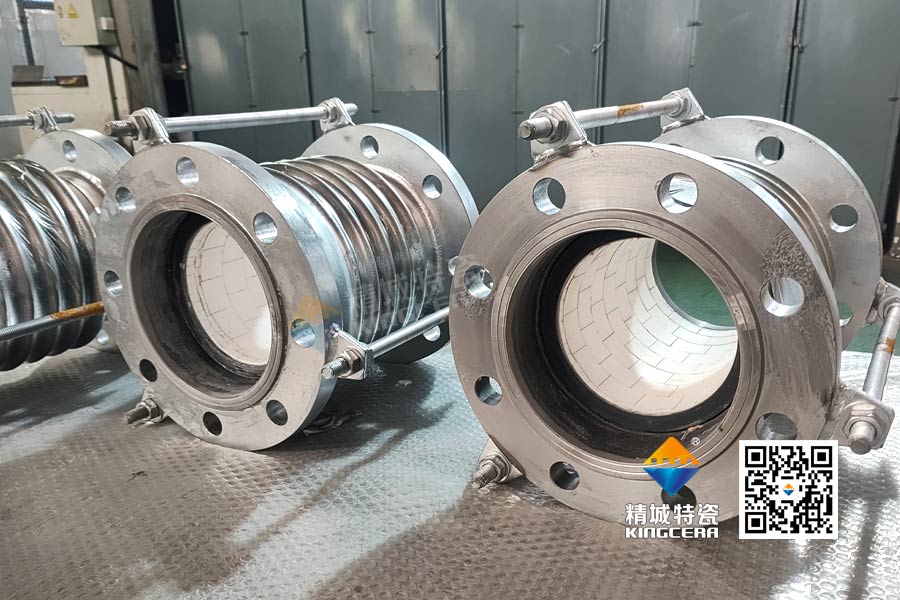
Product Overview
The corrugated pipe compensator lined with monolithic ceramic rings is high-end pipeline displacement compensation equipment specifically developed for severe operating conditions—characterized by high wear, high temperatures, and high pressures—by Hunan Kingcera Engineering Co., Ltd., leveraging over 30 years of technological accumulation in industrial wear-resistant ceramics. The product is composed of a stainless steel corrugated compensation body, high-strength end pipes, an integrally sintered alumina ceramic ring lining, and matching connectors; it absorbs axial, minor transverse, and angular displacements of the pipeline through the flexible deformation of the corrugated pipe, while substituting traditional patched ceramic linings with seamless monolithic ceramic tubes to structurally eliminate industry pain points such as tile detachment, joint erosion, and thermal cracking, making it an optimal upgrade choice for heavily worn pipelines in the thermal power, metallurgy, and mining sectors.
Core Advantages
1. Seamless Integral Molding, Completely Eliminating the Hidden Danger of Detachment
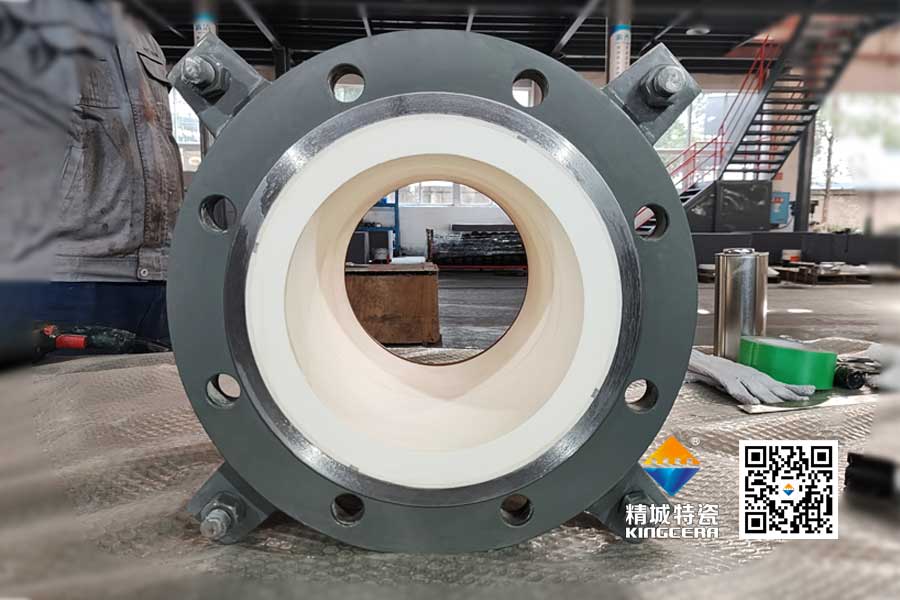
The lining utilizes integrally sintered high-purity alumina ceramic rings (Al₂O₃ content ≥95%) without patched splicing, seams, or gaps, featuring a smooth and dense inner wall that prevents media permeation and erosion through joints, thereby eliminating the risks of ceramic tile loosening, detachment, and cracking; Compared to patched ceramic compensators, its resistance to thermal and mechanical shock is enhanced by over 50%, ensuring no spalling during long-term operation under high-temperature conditions.
2. Ultra-High Hardness and Wear Resistance, Significantly Extending Service Life
The monolithic ceramic rings exhibit a Vickers hardness of HV1000–1500, offering wear resistance far superior to that of ordinary steel pipes and self-propagating high-temperature synthesis (SHS) ceramics; They can withstand the high-speed erosion of hard particles such as pulverized coal, slag, and ash over long periods, increasing the service life by 5 to 10 times or more compared to traditional metal compensators, thereby substantially reducing operation and maintenance costs as well as the frequency of shutdown inspections.
3. Uniform Circumferential Stress, Stronger Resistance to Impact and Erosion
The annular structure uniformly disperses the impact force of the media without localized stress concentration, adapting to high-speed particle erosion conditions of 20–30 m/s (such as pulverized coal conveying in power plants and slurry transport in mines); The seamless and smooth inner wall reduces material flow resistance, lowering wear and energy consumption while preventing material residue and blockages, making it highly suitable for demanding scenarios like pneumatic conveying.
4. Convenient Installation, Broad Adaptability, and Full-Condition Customization
It supports multiple connection methods including flanges, welding, and quick couplings; the overall lightweight design saves time and effort during handling and installation; Specifications can be customized according to the client’s pipe diameter (DN50–DN500), pressure, temperature, and media characteristics; replacing traditional compensators requires no alteration to the pipeline layout, accommodating high-wear scenarios across various industries such as thermal power, metallurgy, mining, cement, and chemicals.
Applicable Industry Scenarios
Power Industry: Pulverized coal feed pipes, pulverized coal return pipes, ash and slag removal pipes, and desulfurization slurry conveying pipes in thermal power plants;
Mining and Coal Industry: Coal washing pipelines, slurry conveying pipes, underground backfill pipelines, and pulverized coal conveying pipes;
Metallurgical Industry: Blast furnace pulverized coal injection pipes, steelmaking slag conveying pipes, and metallurgical powder conveying pipes;
Cement and Building Materials: Raw slurry conveying, pulverized coal conveying, and pneumatic conveying pipelines for finished cement;
Chemical Industry: Conveying pipelines for highly abrasive media such as pulverized coal, silicon powder, and hard chemical raw materials.
Installation Precautions
1. Install according to construction drawings and instruction manuals, rationally setting up guide and fixed brackets to ensure the directional expansion and contraction of the compensator;
2. Protect the corrugated pipe during transportation, hoisting, and welding to avoid striking, scratching, or burning from welding spatter;
3. Clear any foreign objects inside the pipeline and the compensator prior to installation to ensure the normal operation of the ceramic rings and corrugated pipe;
4. Products with flow direction indicators must be installed in the direction of the arrow; reverse assembly is strictly prohibited;
5. Do not use the deformation of the compensator to correct pipeline installation errors to prevent structural damage;
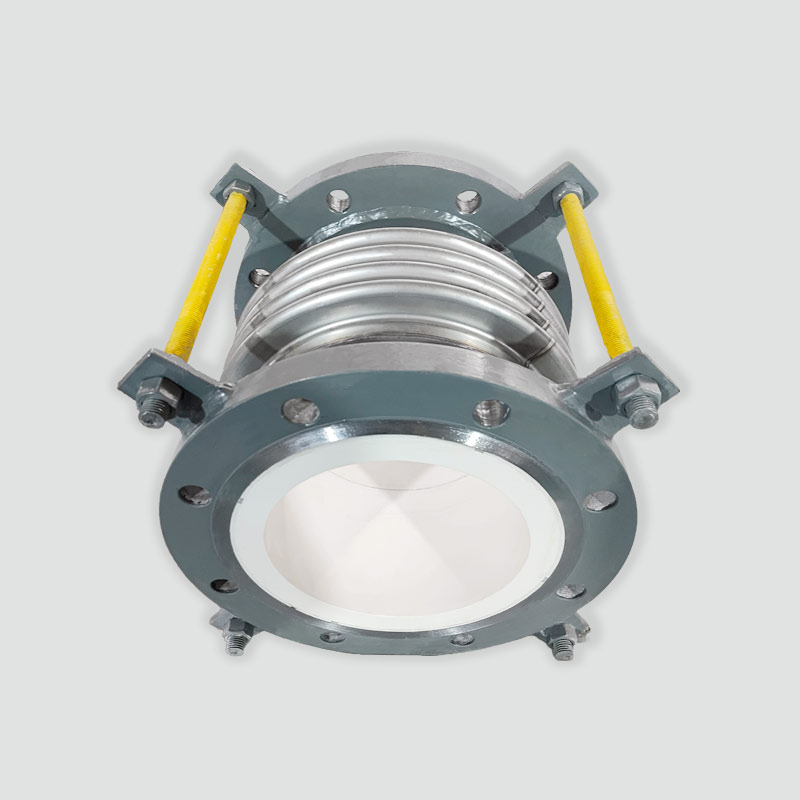
6. Remove all yellow transportation fixing screws after installation is complete and before system operation.
Kingcera Strength Guarantee
Hunan Kingcera Engineering Co., Ltd. has been deeply engaged in wear-resistant ceramics for over 30 years, possessing a standardized factory of over 40,000 square meters, a complete set of precision testing equipment, and a professional scientific research team; the company has passed the ISO9001, ISO14001, and ISO45001 series of certifications, with products exported to regions including Southeast Asia, Europe, Australia, and the Americas. Adhering to the corporate spirit of pursuing excellence and uniting as one, we provide high-quality wear-resistant ceramic solutions to global clients, serving as a trustworthy expert in equipment wear protection.
Product Display
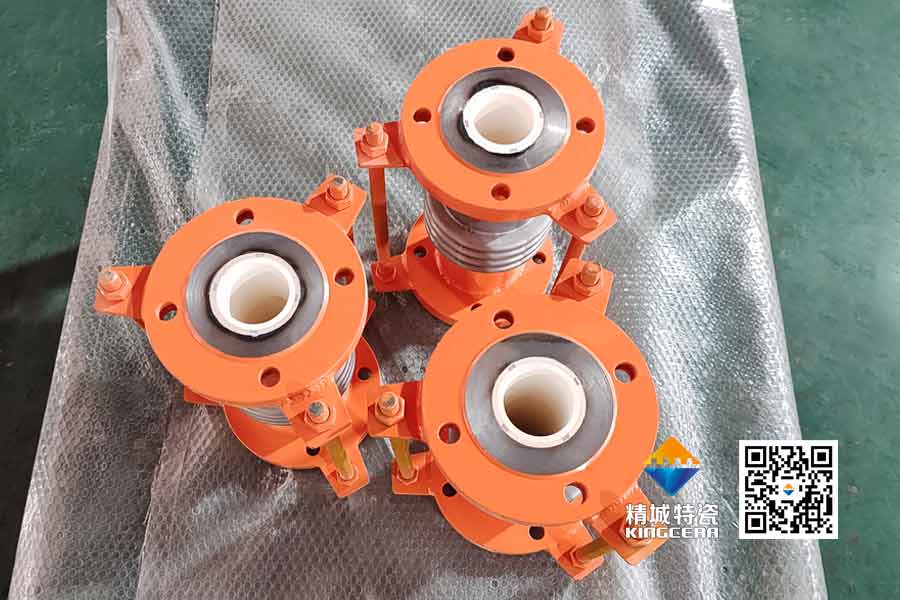
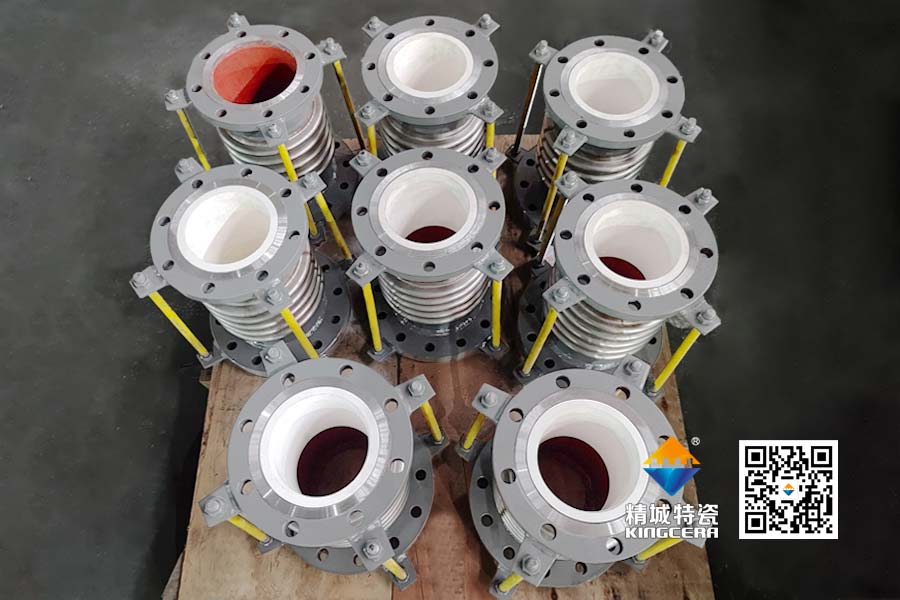
Corrugated Pipe Compensator Lined with Monolithic Ceramic Rings
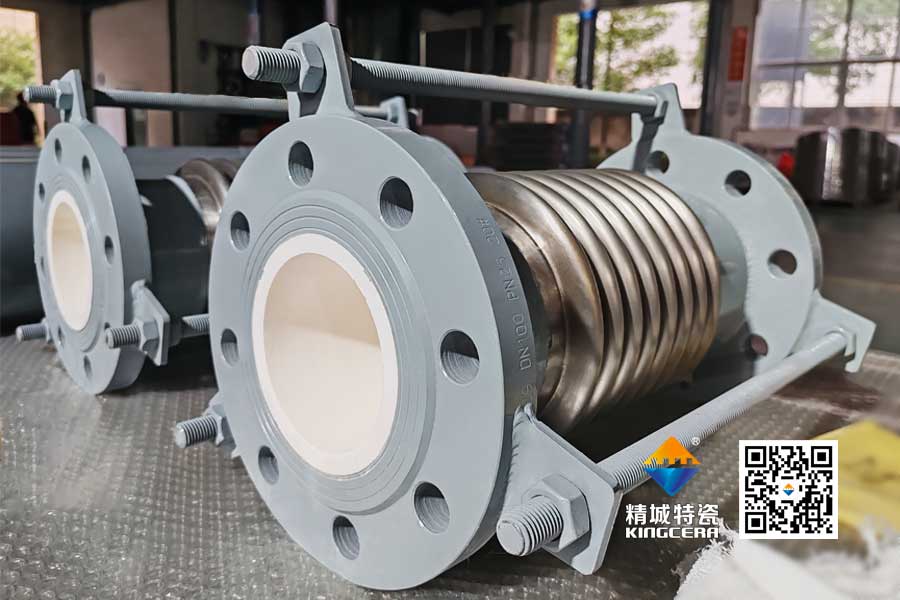
Corrugated Compensator Lined with Monolithic Ceramic Tubes
Monolithic Ceramic Ring Corrugated Compensator






 中文
中文 English
 Pусский
 Español
 日本語
日本語 한국어
한국어