In the fine grinding process of lithium battery materials, the pins inside the sand mill are the core grinding medium. They move at high speed, grinding active substances and other raw materials to the micron or even nanometer level, and their performance is directly related to the quality and production efficiency of battery materials. This working condition imposes stringent requirements on the pins: they must have extremely high hardness and wear resistance to withstand continuous impact and friction; at the same time, they must completely isolate metals to avoid metal contamination caused by wear, which could lead to battery self-discharge, short circuits, and other safety hazards.
For a long time, the industry has generally used composite pins combining polyurethane and ceramics to address this challenge. The polyurethane part has good toughness and provides cushioning, while the ceramic part offers critical hardness and wear resistance. However, this “combination of rigidity and flexibility” design reveals a fatal weakness in practical applications: in high-speed sand mills, the connection points between polyurethane and ceramic, which have vastly different physical properties, become fragile due to continuous stress and eventually break. Once a break occurs, it not only results in downtime for repairs, disrupting production continuity, but the broken fragments can also mix into the slurry, causing more severe contamination and product batch scrapping.
If the pins are made entirely of polyurethane, although this solves the risks of metal contamination and breakage, their insufficient hardness and poor wear resistance are magnified under harsh grinding conditions, causing the pins to wear out too quickly, with a very short lifespan, which also fails to meet the requirements of continuous industrial production. The industry is caught in a dilemma: metal isolation is required, but so is durability.
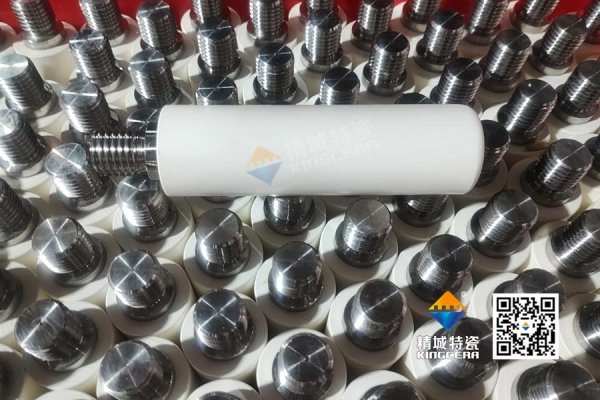
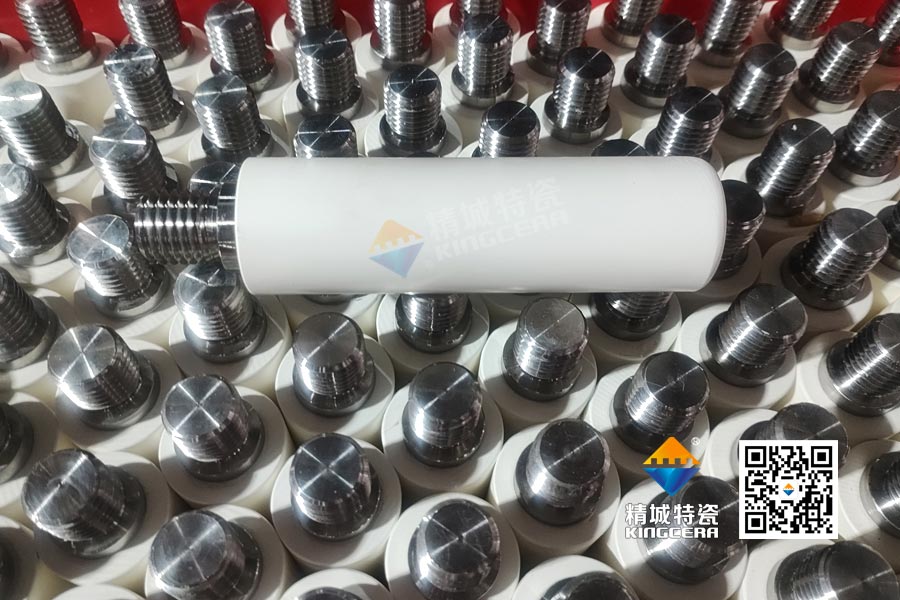
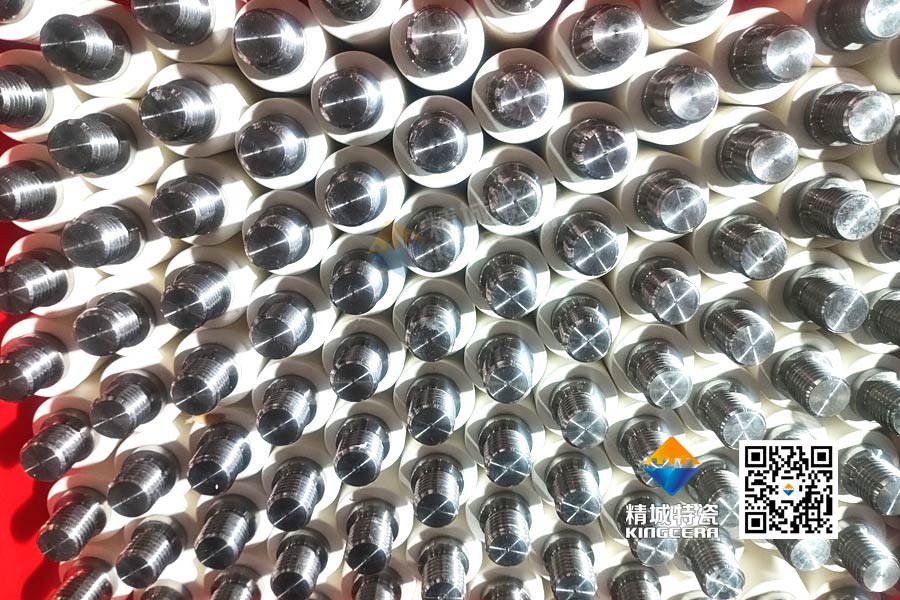
Facing this industry pain point, Kingcera provides its solution: abandoning composite structures and developing one-piece pure ceramic pins for lithium battery sand mills. The core of this design philosophy is to simplify complexity and solve the problem at its material source.
Advantages of pure ceramic pins
Eliminating metal contamination at its source: made of high-purity, high-density alumina and other advanced industrial ceramics, ensuring that the grinding medium itself does not introduce any metal impurities, thereby providing a foundational guarantee for improving the consistency and safety of lithium batteries.
Excellent wear resistance and long lifespan: the hardness of special industrial ceramics is second only to diamond, and its exceptional wear resistance far exceeds that of polyurethane and even metals. This means that pure ceramic pins have an extremely low wear rate when dealing with equally corrosive slurries, significantly extending their lifespan, reducing the frequency of replacement, and improving overall equipment utilization.
High overall strength, avoiding breakage risks: as an integrated structure made of a single material, it completely eliminates stress concentration at the interfaces of different materials. Its high mechanical strength and integrity allow it to withstand high-speed impacts and complex stress within sand mills, fundamentally solving the chronic issue of breakage at the connections of composite pins and ensuring production continuity and stability.
The pure ceramic pins designed by Kingcera are not merely a simple material substitution but a precise upgrade tailored to the grinding conditions of lithium battery materials. In the most direct way, it simultaneously meets the two core requirements of “no metal contamination” and “superior wear resistance and durability,” providing a reliable tool for the high-standard and high-efficiency production of lithium battery materials, driving the industry forward in its pursuit of higher quality and lower costs.
(Original link:
告别金属污染与断裂:纯陶瓷棒钉助力锂电砂磨机棒钉优化升级)
Samuel Wu / Translated


 中文
中文 English
 Pусский
 Español
 日本語
日本語 한국어
한국어