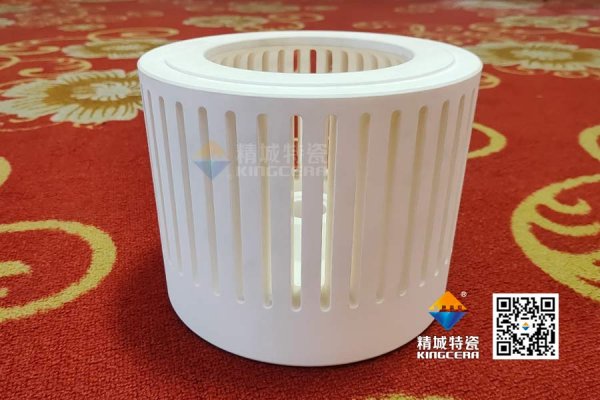
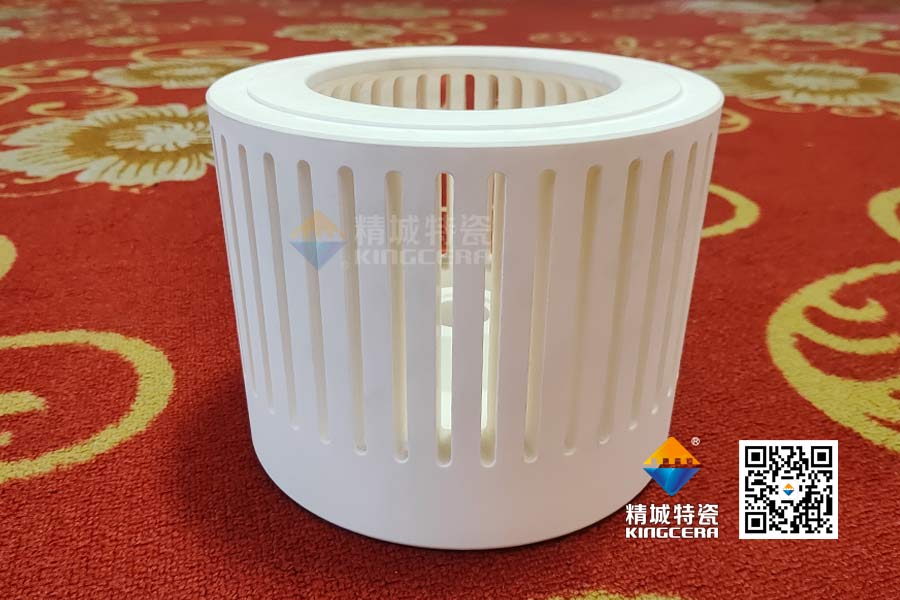
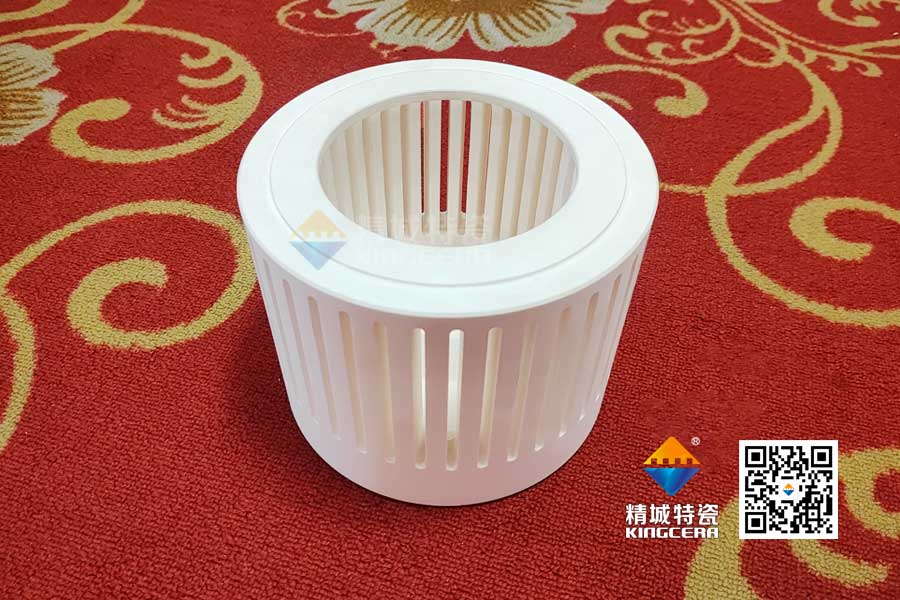
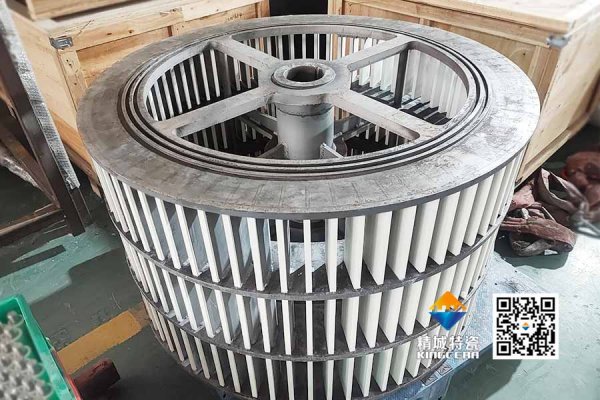
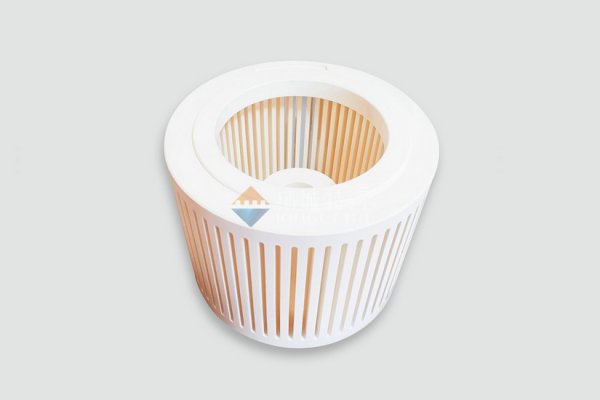
As the core component of precision classification equipment for lithium battery powders, the classifier wheel plays a critical role in the purity, particle size distribution, and batch consistency of cathode and anode materials; consequently, the quality of the classifier wheel directly impacts product quality, production efficiency, and operational costs.
Kingcera has focused on the production of wear-resistant ceramics for over 30 years, accumulating rich on-site experience in high-wear industries such as thermal power, iron and steel, and mining, while also establishing a strong reputation in sectors like new energy lithium batteries. The company commands independent production capabilities across the entire process—from the preparation of high-purity ceramic powders, press forming, and high-temperature sintering to precision machining—and has led or participated in the formulation of multiple national and industrial standards for wear-resistant ceramics. Addressing the classification requirements of lithium battery cathode and anode materials, Kingcera can provide
ceramic classifier wheels made of alumina, zirconia, and silicon carbide, facilitating stable production for clients with reliable performance and reasonable costs.
I. Full-Process Independent Production, with Quality Controllable Throughout
1. Complete ceramic manufacturing chain: Kingcera possesses a complete ceramic manufacturing chain, providing one-stop services with full-process autonomous controllability;
2. Self-developed and self-prepared powders: The raw material ratio can be adjusted according to application requirements, controlling material performance from the source;
3. Forming and sintering: Utilizing an isostatic pressing and high-temperature dense sintering process ensures uniform green bodies and dense microstructures;
4. Ultra-precision machining: Equipped with various high-precision devices such as CNC machine tools, engraving machines, and grinding machines to guarantee the precision of blade clearances, arcs, and dynamic balance;
5. Strict inspection: Kingcera has passed ISO9001 quality management system certification, and every batch of products undergoes testing for dimensions, density, hardness, and wear resistance.
Because all manufacturing stages are completed in-house, Kingcera can flexibly adjust any process step according to client needs, ensuring delivery cycles and quality traceability.
II. Core Performance Advantages
1. Excellent Chemical Inertness to Prevent Material Contamination
Lithium battery cathode and anode material production lines frequently encounter weak acids, weak alkalis, or high-temperature powders; if the classifier wheel suffers from corrosion or generates wear debris, impurities can be easily introduced.
Kingcera’s ceramic classifier wheels feature a fully dense sintered structure, offering excellent chemical stability:
Zirconia classifier wheels: Their acid and alkali resistance is superior to that of metals and organic materials, ensuring no component precipitation during long-term operation; concurrently, their high toughness makes them less prone to brittle fracture.
Alumina classifier wheels: Characterized by corrosion resistance and high hardness, they present no ion dissolution issues, making them economical and practical.
Silicon carbide classifier wheels: Exhibiting extremely strong chemical inertness alongside high-temperature and oxidation resistance, they are particularly suitable for harsh environments where corrosion and wear coexist.
All three materials can maintain surface stability during lithium battery production, effectively preventing contamination from soluble or granular foreign matter.
2. Strict Control of Magnetic Impurities to Meet the High Cleanliness Requirements of Lithium Batteries
Lithium battery cathode and anode materials have strict limits on the content of magnetic impurities. Starting from the powder formulation, Kingcera implements strict controls; through forming, sintering, precision machining, and final packaging, every stage incorporates magnetic impurity management measures—including dedicated tooling, regular cleaning, and cleanroom operations. Clients can apply them directly to sensitive systems such as high-nickel ternary materials, lithium iron phosphate, and graphite, without concerns regarding additional demagnetization processes.
3. Matched Coefficient of Thermal Expansion for Lasting and Stable Classification Precision
The classifier wheel generates thermal expansion due to temperature rises during high-speed rotation; if the coefficient of linear expansion is too large, changes in blade clearance will lead to shifts in the powder particle size distribution.
The thermal expansion performance of Kingcera’s ceramic classifier wheels has been specifically optimized:
Zirconia classifier wheels: With a coefficient of linear expansion of approximately 9.6×10⁻⁶/K (from room temperature to 500℃), they exhibit minimal dimensional changes;
Alumina classifier wheels: With a coefficient of linear expansion of approximately 7.2×10⁻⁶/K, high-temperature deformation is extremely slight;
Silicon carbide classifier wheels: With a coefficient of linear expansion of approximately 4.0×10⁻⁶/K, their thermal stability is particularly outstanding.
Complemented by Kingcera’s micron-level precision machining capabilities, the blade clearance of the classifier wheel can maintain its design value over the long term, ensuring a consistent particle size distribution in the finished product and preventing issues with oversized particles or over-grinding.
4. High Density and High Wear Resistance to Significantly Extend Service Life and Reduce Costs
Cathode and anode powders possess high hardness and flow at fast speeds, causing severe erosive wear on the classifier wheel. Traditional metal or polyurethane classifier wheels typically last only a few weeks to several months, and frequent shutdowns for replacement severely impact production line efficiency.
Employing an isostatic pressing and high-temperature dense sintering process, Kingcera’s ceramic classifier wheels offer a wear-resistant service life over three times that of ordinary materials:
Alumina classifier wheels: With a density ≥3.8 g/cm³ and hardness ≥HRA 85, they provide a high cost-performance ratio and are suitable for most lithium battery powders;
Zirconia classifier wheels: With a density ≥6.0 g/cm³ and hardness ≥HRA 88, they offer good toughness, making them suitable for high-speed rotation or impact-prone operating conditions;
Silicon carbide classifier wheels: Featuring a density of 3.0–3.15 g/cm³ and high hardness (HRA 93–96, Vickers hardness ≥2600 HV), their wear resistance is exceptionally outstanding, making them suitable for ultra-hard powders or continuous, uninterrupted production.
In practical applications, Kingcera’s ceramic classifier wheels can substantially reduce replacement frequency, thereby lowering spare parts costs and downtime losses.
III. Core Competitiveness: Personalized Services Driven by Over 30 Years of Experience
Kingcera’s advantage lies not only in its manufacturing and ceramic precision machining capabilities but also in the on-site experience accumulated through long-term, in-depth engagement with various wear conditions.
Personalized wear protection solutions: Based on the client’s air classifier equipment model, powder hardness, particle size distribution, corrosiveness, operating temperature, and rotational speed, we recommend the most suitable ceramic materials and structural designs;
Flexible customization: Not limited to standard specifications, we can adjust the number, thickness, curvature, and installation methods of the blades according to blueprints or actual wear conditions;
Rapid verification: Relying on full-process production capabilities, we support small-batch prototyping and trial manufacturing to reduce the client’s implementation risks.
Kingcera—Refraining from merely piling up parameters, we focus solely on solving practical problems. With thirty years of wear-resistant experience, full-process in-house quality control, three categories of ceramic materials, and personalized wear protection schemes, we provide reliable and economical ceramic solutions for the classification of lithium battery cathode and anode materials.
(Original link:
精城特瓷陶瓷分级轮:三十余年耐磨底蕴,为锂电正负极材料分级提供高性价比方案 )
Samuel Wu / Translated


 中文
中文 English
 Pусский
 Español
 日本語
日本語 한국어
한국어
