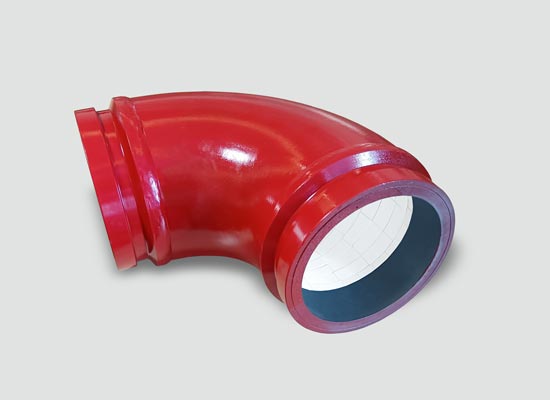
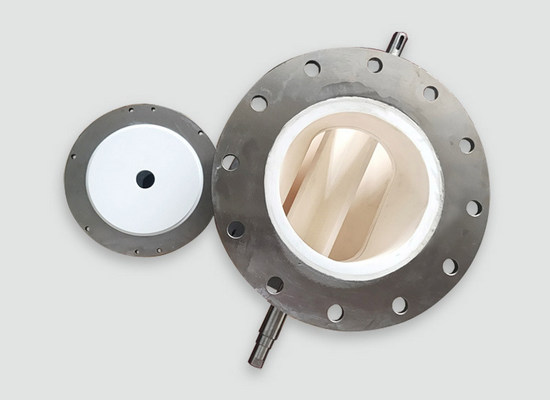
In the sintering process of steel smelting, the conveying and classification of blast furnace slag is an unavoidable phase. When the material particle size is as fine as approximately 9 microns, the erosive wear sustained by the high-speed rotating classifier wheel often exceeds expectations.
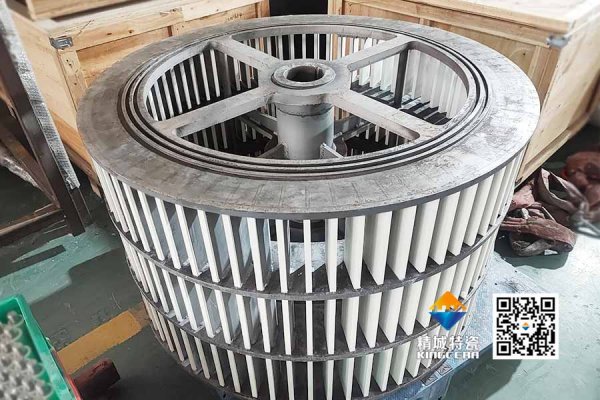
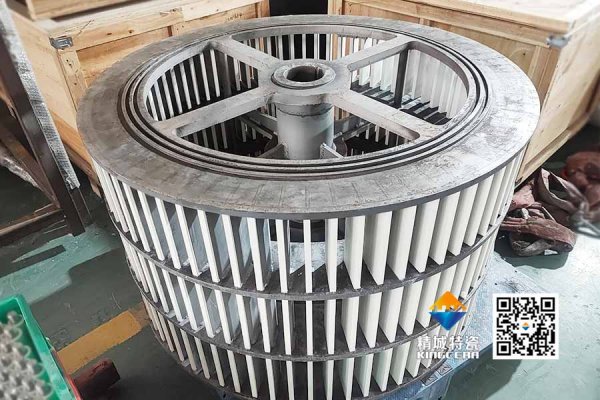
Recently, our company received feedback from an overseas powder equipment enterprise. The enterprise operates a classifier wheel with a diameter of 1100 mm and a height of 550 mm, which is used long-term for processing micron-sized slag particles. Due to the high hardness and fine granularity of the materials, coupled with the high linear velocity of the classifier wheel, the original equipment matrix suffered severe wear under continuous erosion; this resulted in frequent equipment maintenance and replacements, seriously compromising the continuity of the production line and the quality of finished products while keeping labor and material costs persistently high.
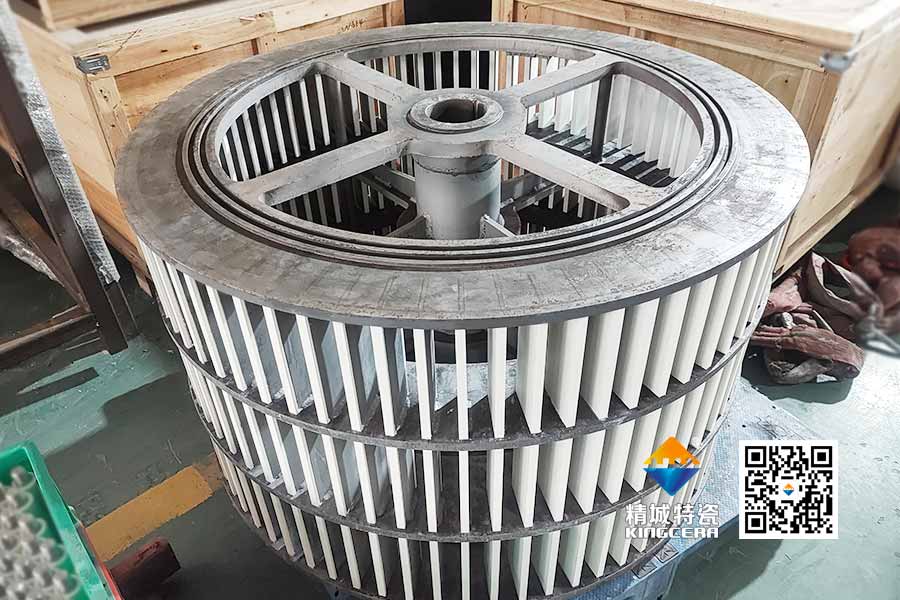
In response to these operating conditions, our sales and technical teams engaged in multiple rounds of in-depth communication with the client, focusing on understanding the structural form, operational parameters, and concentrated wear areas of the classifier wheel. Drawing upon our years of accumulated expertise in the field of wear protection, we eschewed traditional hardfacing or standard coating schemes and proposed a more targeted approach: utilizing precisely machined zirconia-alumina composite ceramic tiles with slots to provide internal lining protection for the classifier wheel.
The advantage of zirconia-alumina composite ceramic materials lies in their combination of zirconia’s fracture toughness and alumina’s high hardness, enabling them to resist both the continuous cutting wear of micron-sized slag and the particle impact during high-speed operation. On this basis, we performed precision machining on the ceramic tiles to ensure their contours achieved a high degree of fit with the complex curved structures of the classifier wheel. The slot design further ensured installation reliability and positional accuracy, ultimately achieving a nearly seamless cladding protection. The smooth and flat working surface of the ceramic tiles not only reduces the flow resistance of passing materials but also thoroughly isolates the slag particles from the base metal.
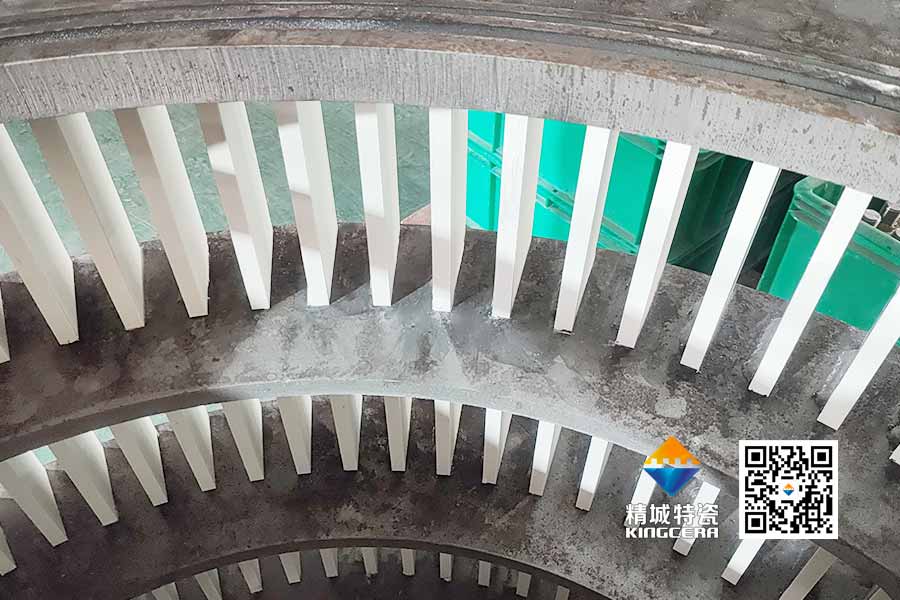
Following the implementation of this solution, the client reported that the wear issues of the classifier wheel had been substantially mitigated. The operational lifespan of the equipment was significantly extended, leading to enhanced stability of the production line and a drastic reduction in unplanned downtime caused by classifier wheel failures.
Our company has long been dedicated to the research, development, and manufacturing of wear-resistant ceramic linings, providing wear protection solutions for fields such as powder conveying, classification and sorting, and mining equipment. Whether for conventional specifications or irregularly shaped components, we design and process them based on actual operating conditions, ensuring the protective efficacy through meticulous technical details.
(Original link:
高炉矿渣分级用卡槽式锆铝复合陶瓷内衬分级轮——高硬度高韧性,大幅减少更换频次 )
Samuel Wu / Translated
![[Case Study] Ceramic Lining Project for Blast Furnace Hoppers and Bins at a Steel Plant: Expected Service Life Reaches 10 Years](http://www.kingcera.com/zstatic/uploadimg/251011/094G41194-0.jpg)



 中文
中文 English
 Pусский
 Español
 日本語
日本語 한국어
한국어